
Precision Plastic Mold Manufacturing for USA Industry Leaders
Plastic mold manufacturers in the USA produce over 90% of all custom injection molds used for durable, everyday products. These facilities transform raw plastic resin into precise, repeatable shapes using heated, pressurized injection into steel cavities. By partnering with a domestic molder, you gain direct access to expert engineering support for your part design, ensuring lower prototyping costs and faster production cycles. Simply submit your CAD file and material preference, and the manufacturer handles the full tool-making and molding process for you.
Why Precision Tooling Matters in Modern Manufacturing
For a plastic mold manufacturer USA, precision tooling is the backbone of reliable production. Without exacting tolerances, your molds will produce parts that fail to fit or function. Even a 0.001-inch deviation can ruin an injection-molded component, leading to costly rejects and downtime. Precise tooling ensures consistent cavity alignment, smooth ejection, and proper cooling channel placement—all critical for high-volume runs. For a US-based shop, this matters because labor and material costs are high; scrap is not an option. Sharp, accurate tools also reduce cycle times and extend mold life, directly improving your bottom line. When you source from a domestic plastic mold manufacturer USA, you get that tight control, translating into reliable parts that assemble correctly the first time.
Key Differences Between Domestic and Overseas Mold Builders
Domestic mold builders offer inherent advantages in communication and collaboration, as time zone alignment and direct site visits eliminate costly translation errors. Overseas builders often compete on raw pricing but require strict adherence to standardized drawing conventions. The critical divergence lies in revision agility: a USA-based shop can implement engineering changes in days, while overseas iterations may take weeks due to logistical lag and material sourcing delays. This proximity directly impacts precision tooling consistency, as domestic builders maintain tighter control over heat treatment and steel selection within shorter supply chains, whereas overseas operations introduce variance through multiple subcontractors.
How Custom Molds Boost Production Efficiency
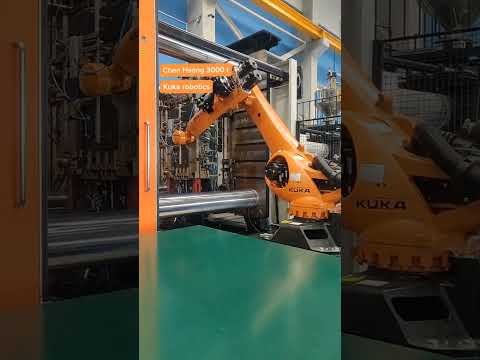
Custom molds directly eliminate inefficiencies inherent in generic tooling. By engineering cavity geometry and cooling channels for a specific plastic part, a plastic mold manufacturer usa can drastically reduce cycle times. Optimized cooling layouts remove heat faster, allowing for quicker part ejection without warping. Precision gates and runners minimize material waste, while tailored ejection systems reduce friction and scrap rates. This alignment of tool design with part geometry and machine capabilities ensures consistent output at higher volumes, lowering per-unit cost through pure operational refinement.

Core Services Offered by American Mold Shops
American mold shops specializing as a plastic mold manufacturer USA provide end-to-end tooling services, from injection mold design and CNC machining to EDM (electrical discharge machining) and mold assembly. They deliver critical services like mold flow analysis to optimize part geometry, prototype tooling for low-volume production, and production mold building using hardened steel or aluminum. A core offering is multi-cavity and family mold construction, maximizing output per cycle. On-site mold tryouts and sampling are standard, ensuring dimensional accuracy and cycle time validation before mass production. Mold repair, engineering changes, and maintenance programs further support long-term tool life and uptime, making these shops a single-source partner for complex, high-precision plastic components.
Injection Molding Tooling for High-Volume Runs
For high-volume runs, American mold shops build injection molding tooling from premium steels like H13 or S7, ensuring durability over millions of cycles without warping. The cavity and core are precision-machined with conformal cooling channels to slash cycle times, keeping your per-part costs low. Multi-cavity tooling lets you produce dozens of identical parts per shot, maximizing output. Your mold design includes hardened inserts for wear-prone areas, swapping them out during maintenance rather than replacing the entire tool. This approach keeps consistent quality across massive production orders, so you hit deadlines without compromise.

Prototype Molding and Rapid Tooling Solutions
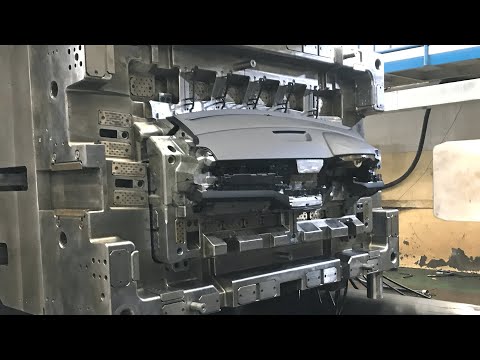
Prototype molding and rapid tooling solutions allow plastic mold manufacturer USA plastic injection molding automotive parts facilities to produce functional parts for design verification before committing to production tooling. These services typically employ aluminum or soft steel molds, reducing lead times to weeks rather than months. Low-volume injection molding with rapid tooling enables bridge production while hard tooling is prepared. Key decisions involve trade-offs between mold lifespan and speed of delivery for specific project phases. Part geometry, material selection, and dimensional tolerance requirements directly influence which rapid tooling approach—such as CNC-machined or 3D-printed inserts—is most cost-effective.
Prototype molding and rapid tooling deliver production-quality parts quickly for testing, bridging the gap between design and full-scale manufacturing.
Insert Molding and Overmolding Capabilities
American mold shops deliver precision insert molding and overmolding for complex part consolidation. Insert molding encapsulates metal threads, pins, or electronics directly into plastic during injection, eliminating post-mold assembly and ensuring permanent mechanical lock. Overmolding bonds a soft-touch TPE or elastomer layer over a rigid substrate, creating ergonomic grips, seals, or vibration-dampening surfaces in a single cycle. Shops achieve dimensional stability by using multi-shot presses or robotic part transfer for secondary injection. These capabilities reduce part count, improve durability, and shorten lead times for medical devices, automotive connectors, and power tools—all while maintaining tight tolerances on dissimilar material interfaces.
Industries Reliant on US-Based Injection Tooling
In a Detroit tool shop, a family-run plastic mold manufacturer USA crafts injection molds for automotive dashboards, while across town another shop steels for medical device housings. Aerospace firms, requiring MIL-spec precision, rely on these same domestic toolmakers for complex, low-volume components. Consumer electronics—smartphone casings, battery enclosures—depend on rapid, US-based mold iterations to meet launch deadlines. Q: Which industry demands the tightest tolerances from US injection tooling? A: Medical and aerospace, due to regulatory and safety-critical fits. A packaging company in Ohio uses US-made molds for tamper-evident closures, where material flow and gate placement must be flawless. These sectors trust American shops for localized expertise, faster troubleshooting, and direct communication, avoiding transcontinental logistics delays that would halt production lines.
Automotive Component Mold Specialists
Automotive Component Mold Specialists within a US-based plastic mold manufacturer USA engineer precision tooling for high-stakes parts like dashboards, bumpers, and under-hood housings. These experts focus on tight-tolerance steel molds that survive millions of cycles with materials like glass-filled nylon. They collaborate directly with OEM engineers to design complex geometries, ensuring no flash or warp in final components. Every mold is tested for rapid cycle times to meet automotive assembly demands.
- Design multi-cavity tools for lights and trim
- Integrate conformal cooling lines for even part shrinkage
- Validate molds with prototype runs before production ramp
Medical Device Molding and Class 100 Cleanrooms
Medical device molding within a US-based plastic mold manufacturer demands Class 100 cleanroom environments to eliminate particulates during production. These facilities maintain stringent air filtration and positive pressure, directly preventing contamination of implants, surgical tools, and diagnostic components. A precise sequence governs output:
- raw material is isolated in a controlled staging area,
- molding occurs under HEPA-filtered airflow,
- then parts are sealed immediately for sterile transfer.
Every micron of precision here can determine implant biocompatibility or device failure. This process ensures that molds for catheters, syringes, and monitor housings meet FDA-mandated particulate limits without secondary cleaning, making Class 100 capability non-negotiable for medical-grade tooling.
Consumer Goods and Packaging Tooling
Consumer goods and packaging tooling from a US-based plastic mold manufacturer demands high cavitation molds for rapid, consistent production of items like bottle caps, containers, and closures. High-cavitation hot runner tooling minimizes cycle times while ensuring precise part-to-part repeatability for caps and thin-wall packaging. Molders often specify hardened stainless steel cavities to resist wear from abrasive fillers in consumer packaging resins like polypropylene. A key distinction is the need for Class 101 or 102 molds, engineered for millions of cycles without tolerance drift, directly impacting sealing integrity of food containers.
| Tooling Feature | Consumer Goods | Packaging |
|---|---|---|
| Primary Resin | ABS, HIPS | PP, HDPE |
| Critical Tolerance | Aesthetic finish | Cap/liner seal fit |
Advanced Technologies in Modern Tool Rooms
Inside a modern tool room serving a plastic mold manufacturer USA, advanced technologies shave weeks off lead times. Wire EDM machines cut hardened tool steel to micron tolerances overnight, while five-axis CNC mills simultaneously create complex cavity geometries and cooling channels in a single setup. The machinist relies on real-time optical scanning to compare the cut steel against the CAD model mid-operation, adjusting passes before a flaw compounds. One unexpected benefit of these integrated systems is that they let the toolmaker spend more time tweaking surface finishes for cosmetic parts, rather than just chasing dimensional targets. This precision ensures the mold’s first shots produce defect-free medical or consumer components, eliminating costly rework for the client.
High-Speed CNC Machining and EDM Precision
In modern US plastic mold manufacturing, high-speed CNC machining and EDM precision work in tandem to produce complex cavity geometries and ultra-fine surface finishes. High-speed CNC roughs out hardened tool steel rapidly, using optimized toolpaths that reduce cycle times while maintaining micron-level accuracy. Wire and sinker EDM then take over where milling cannot reach, burning intricate features like sharp internal corners, deep ribs, or fine texturing without mechanical stress. Regardless of the mold’s complexity, roughing with CNC and finishing with EDM ensures repeatable tolerances and mirror-like polish on the final mold surface.
| Aspect | High-Speed CNC Machining | EDM Precision |
|---|---|---|
| Primary Use | Rapid material removal and 3D contouring | Intricate details, sharp corners, and deep cavities |
| Surface Finish | Good, but may require secondary polishing | Excellent, often mirror-like straight from machine |
| Material Limitation | Struggles with very hard or brittle steels | Ideal for pre-hardened tool steel or carbide |
| Cycle Time | Fast for roughing, slower for detail work | Slower burn rate, but eliminates hand-finishing |
Hot Runner vs. Cold Runner Mold Design
In modern tool rooms, the choice between hot runner and cold runner mold design directly impacts cycle time and material waste. Hot runner systems, which keep plastic molten within heated manifolds, eliminate runner scrap, making them ideal for high-volume production or expensive resins like PEEK. Cold runner molds, in contrast, produce solidified runners that are reground and reused, offering simpler maintenance and lower initial tooling costs. For a plastic mold manufacturer USA, selecting hot runners reduces part weight consistency concerns but requires precise temperature control, while cold runners suit short runs or materials prone to thermal degradation.
Hot runner molds prioritize efficiency and zero waste for high volumes; cold runner molds favor cost-effectiveness and simplicity for lower volumes or sensitive materials.
3D Printing for Conformal Cooling Channels
In modern tool rooms serving the USA plastic mold industry, 3D-printed conformal cooling channels replace straight-line drilled passages with geometrically optimized pathways that trace the cavity surface. This additive manufacturing technique eliminates hot spots by maintaining uniform coolant distance from the core and cavity walls, drastically reducing cycle times by 25–50% while improving dimensional stability in production. The channels are built layer-by-layer in maraging steel or copper alloys directly within the mold insert, enabling complex serpentine geometries impossible with conventional machining. A mold designer’s primary focus is balancing channel diameter (typically 2–4 mm), wall thickness, and surface finish to prevent coolant turbulence issues. Q: What is the primary limitation of 3D-printed conformal cooling channels? A: Achieving consistent internal surface finish below 5 µm Ra is difficult, increasing risk of mineral scaling or fouling in the coolant circuit over extended production runs.
Selecting the Right Partner for Your Project
Selecting the right partner for your project hinges on a manufacturer’s proven experience with your specific part geometry and material. A USA-based shop with in-house tooling, advanced CNC, and mold flow simulation will drastically reduce iteration cycles. Prioritize a partner who provides a detailed Design for Manufacturability (DFM) report before cutting steel, as this reveals their engineering depth and commitment to your success.
A partner who identifies and solves potential issues in the DFM stage is more valuable than one who simply quotes the lowest price, saving you thousands in downstream delays.
Demand clear communication on lead times and a willingness to run prototype trials in production-grade steel to validate your design before full-scale manufacturing begins.
Experience with Complex Geometries and Tight Tolerances
When evaluating a plastic mold manufacturer USA, their proven track record with complex geometries and tight tolerances separates capable partners from risky ones. A partner must employ advanced multi-axis CNC machining and EDM to craft intricate cores and cavities that defy standard tool paths. Tolerances within ±0.001 inches demand not just machine capability, but rigorous in-process inspection protocols to catch deviation before it reaches your part. For thin-wall features or deep ribs, mold flow analysis simulation paired with real-world trial runs confirms they can handle your geometry without sink marks or warpage. A table might clarify capabilities:
| Aspect | Competent Partner | Limited Partner |
|---|---|---|
| Geometry Handling | Undercuts, threads, living hinges via lifters & slides | Simple draft angles, block shapes only |
| Tolerance Cap | Holds ±0.002” on critical dimensions | Struggles below ±0.005” |
| Validation | CMM reports with step-by-step adjust feedback | Bypasses final measurement on complex features |
Insist on seeing case studies of similar tight-tolerance molds—this directly proves their experience managing your geometry’s stress points and cooling challenges.
Lead Time Management and On-Time Delivery Records
When evaluating a plastic mold manufacturer USA, assessing their lead time management and on-time delivery records is critical. A reliable partner provides a clear timeline from design approval to first articles, with documented milestones. Review their historical delivery performance by requesting specific project completion rates and average delay durations. Factories with integrated scheduling systems can adjust for tooling revisions without derailing the primary deadline.
- Request a detailed pre-production schedule that maps each phase—machining, texturing, and sampling—to specific calendar dates.
- Insist on a contractual penalty clause for missed delivery windows to ensure accountability for lead time promises.
- Analyze their backlog-to-capacity ratio; a manufacturer consistently operating at full capacity may struggle with urgent orders.
Material Expertise Across Engineering-Grade Resins
When selecting a plastic mold manufacturer USA, material expertise across engineering-grade resins determines if your part withstands real-world stress. A partner must navigate subtle differences between glass-filled nylon, PEEK, and polycarbonate—each demanding distinct mold temperatures, shrinkage compensation, and gate placement. One misjudged fill rate can compromise tensile strength before the first shot cools. The best molders provide empirical data on resin-specific flow behavior, recommending material substitutions when design constraints clash with moldability, ensuring your component meets fatigue, chemical, or thermal requirements without last-minute grade swapping.
| Resin | Key Processing Pitfall | Expertise Required |
|---|---|---|
| 30% GF Nylon | Warpage from anisotropic shrinkage | Fiber-orientation simulation |
| PEEK | Narrow melt window (340–400°C) | High-temp mold steel & hot runner |
| Polycarbonate | Stress cracking from moisture | Drying protocols & slow injection |
Quality Assurance and Industry Standards
For a plastic mold manufacturer USA, quality assurance begins with rigorous dimensional validation, often using CMM (coordinate measuring machines) to ensure every cavity matches the CAD model within microns. Adherence to industry standards like ISO 9001:2015 is not just a badge; it dictates documented traceability of steel grades and cooling line integrity from first cut to final polish. This commitment to repeatability directly impacts your production uptime, preventing costly cycle delays caused by inconsistent mold tolerances. A top-tier US mold maker will also apply scientific molding principles during tool tryouts, certifying that the mold performs to specified process windows before shipment—turning a raw tool into a guaranteed manufacturing asset.
ISO 9001 Certification and Process Controls
For a plastic mold manufacturer USA, ISO 9001 certification mandates rigorous process controls that directly govern every stage of mold production. This standard enforces strict documentation of injection parameters, temperature setpoints, and cycle times, creating an auditable trail for each cavity and core. Real-time monitoring systems, tied to your certification, automatically flag deviations in pressure or cooling rates, prompting immediate corrective actions before defects arise. These controls also standardize material handling and machine maintenance schedules, ensuring repeatable output across complex tooling runs. Without such structured oversight, dimensional tolerances drift and lead times swell, making ISO 9001’s process controls the backbone of consistent, high-precision American mold manufacturing.
First Article Inspection and Dimensional Validation
In plastic mold manufacturing across the USA, First Article Inspection and Dimensional Validation begins immediately after the initial mold trial. A certified CMM operator measures every critical cavity feature, comparing raw point-cloud data against the original 3D model’s GD&T callouts. Any deviation beyond the specified tolerance triggers an immediate tooling adjustment before production release. The report, typically formatted per AS9102 or customer-specific check sheets, documents pass/fail results for each dimension, including surface finish and draft angles. This step ensures mold cavities geometrically match the approved design, preventing downstream scrap and rework.
Long-Term Maintenance and Steel Life Strategies
For US mold makers, steel lifecycle management dictates long-term value. This demands scheduled stress-relief cycles to counteract injection pressures and prevent micro-fractures that crack cavities. Precision remanufacturing—re-cutting worn cores from the same steel block—preserves original alignment rather than patching failures. Applying a PVD coating only after the steel has been re-tempered to its specified hardness ensures the coating bonds, rather than spalls under thermal cycling. Surface treatments like nitriding, applied at intervals tied to shot count, extend service life far beyond tool steel’s untreated fatigue threshold. Proactive cavity polishing at 50,000 cycles removes carbon buildup that otherwise accelerates corrosion during cooling channel condensation.
Cost Factors in Domestic Mold Building
When you work with a plastic mold manufacturer USA, the upfront cost of domestic mold building is driven heavily by the complexity of the cavity geometry—each intricate feature requires additional CNC machining hours and EDM time, which quickly escalates the total. The choice of steel grade, such as opting for premium H-13 over standard P-20, directly impacts tool life but adds thousands to the build price. A Midwest shop might quote a lower hourly rate than a coastal competitor, but that savings can vanish if their lead time pushes your product launch past a critical retail window. You’re effectively paying for both the physical tool and the domestic quality assurance that minimizes surprise rework costs.
Steel Grades from P20 to S7 and Their Impact
Choosing between steel grades from P20 to S7 directly impacts mold longevity and per-part cost. P20, a pre-hardened standard, offers cost predictability for low-to-medium volume runs but limits edge retention. For high-abrasion plastics, upgraded to H13 or S7 tool steel increases upfront expense by roughly 20-40% but extends cavity life against heat-checking and cracking. S7’s impact toughness reduces repair downtime in thin-wall molds.
Question: How do steel grades from P20 to S7 affect injection cycle time?
P20’s thermal conductivity is lower than S7, so thicker P20 cavities require longer cooling cycles, raising per-part cost, while S7’s shock resistance permits faster cycling in high-stress tooling without premature failure.
Mold Base Selection and Cavitation Planning
In domestic USA mold building, strategic cavitation planning directly dictates your per-part cost. Selecting a standard mold base off the shelf—like DME or Hasco—saves weeks of lead time versus a custom plate, but only if your part geometry allows for it. A higher cavitation count (more cavities per cycle) spreads the base’s fixed cost across more parts, yet demands precise balance and runner layout to avoid short shots. For complex parts, a smaller cavitation with a robust base often yields better uptime than squeezing in too many cavities. Q: How many cavities should I plan for balanced cost? A: Start by calculating your annual volume; aim for cavitation that lets you run 8–12 weeks uninterrupted, and choose a mold base that matches your press tonnage exactly—oversizing wastes money on steel and energy.
Hidden Expenses of Low-Bid Overseas Tooling
Choosing low-bid overseas tooling for a plastic mold often masks hidden expenses of low-bid overseas tooling that erode initial savings. You may face unexpected costs for engineering changes to correct dimensional inaccuracies, as overseas manufacturers frequently interpret prints differently. Logistics, including customs delays and expedited freight for rushed repairs, add unpredictability. Tool maintenance becomes costly when proprietary hot runners or non-standard components require expensive, time-consuming replacements. Production downtime from mold failures—due to inferior steel or improper heat treatment—quickly outweighs the upfront difference. These latent costs accumulate, making domestic mold building’s transparent pricing more economical over the mold’s lifecycle.
Future Trends in American Tooling
The future of American tooling for plastic mold manufacturers is pivoting toward hybrid additive-subtractive workflows, where a mold core is first 3D-printed in maraging steel to enable complex conformal cooling channels, then machined to final tolerance on a five-axis mill. This evolution reduces cycle times by up to 30% for high-volume medical or automotive parts, as seen in a recent retooling project for a Midwest mold shop. Q: How does this trend affect mold lifespan? A: The integrated cooling reduces thermal stress, extending tool life by roughly 20% compared to conventional drilling. These machines now run unattended overnight, uploading adaptive toolpath corrections based on real-time spindle load data, which minimizes human error and accelerates delivery for USA-based mold builders.
Automation and Lights-Out Manufacturing
Automation and lights-out manufacturing are redefining plastic mold production in the USA by enabling continuous, unattended machining cycles. Robotic cells now load steel blanks, change tools, and inspect molds overnight, slashing lead times while maintaining micron-level precision. This setup lets a mold manufacturer operate lights-out for roughing and electrode milling, freeing daytime labor for complex finishing. The result is consistent, 24/7 output without added overhead, making lights-out mold machining a practical path to faster delivery and lower per-part cost. By trusting automated systems to handle repetitive tasks, shops maximize spindle uptime and reduce human error on critical toolpaths.
Lights-out manufacturing uses robotics and automated tool changers to run mold production unattended, boosting efficiency and precision around the clock.
Digital Twin Simulation for Mold Flow Analysis
Digital twin simulation for mold flow analysis lets a plastic mold manufacturer test how molten material fills a cavity before cutting steel. You can spot air traps, weld lines, or warpage in a virtual environment and tweak gate placement or cooling channels on the fly. This means fewer trial shots, less scrap, and faster first-article approval. For an American mold shop, it turns guesswork into a precise, repeatable process.

- Predicts fill patterns and pressure drops before mold build
- Optimizes cooling line layout to reduce cycle time
- Catches potential defects like short shots or sink marks early
Sustainability Through Recycled Resin Tooling
Sustainability through recycled resin tooling in the USA involves molds engineered specifically for post-consumer and post-industrial recycled plastics, which have inconsistent flow and shrinkage. This requires hardened tool steel and advanced gate designs to withstand abrasive regrind and prevent premature wear. The focus is on adapting mold cooling channels to the lower melt temperatures of recycled resins, ensuring consistent cycle times without warping. Closed-loop mold maintenance becomes critical, as recycled materials leave more residue, necessitating predictive cleaning schedules to preserve cavity tolerances over higher production volumes.
- Adjusting gate geometry to handle varied viscosity from recycled resin batches
- Applying corrosion-resistant coatings on cavity surfaces to resist degraded polymer outgassing
- Modifying ejection systems to compensate for reduced shrink rates in recycled materials
- Integrating real-time pressure sensors to detect fill inconsistencies from regrind content